
This article can be read as Part 2 of “Hands of Support,” which I wrote in 2023.
Here, I offer further reflections and a simple framework for new teachers—even if the subject itself is not always simple.
The first C stands for Consent, the second one stands for Confidence, and the third one stands for Care.
If any one of these elements is missing, the teacher should keep their body—especially their hands—to themselves.
Consent is widely discussed and debated in yoga teaching. Rather than repeat my first article, I define it here as clear communication from the student that they agree to supportive physical contact. That communication should remain discreet, respect confidentiality, and create neither pressure nor assumptions. Consent chips, for example, are one effective way to establish this kind of respectful relationship.
Why are we asking consent for tactile or physical support? Is it necessary to be present in a yoga class?
Physical support is not about reshaping, “adjusting,” “fixing,” or forcing a posture.
Instead, physical support can hold space, stabilize the student, and offer a grounding presence.
Through guided touch and kinesthetic awareness, the teacher can communicate spatial and energetic directions to the student.
It can help students deepen their awareness of their own internal alignment, stability, and breath.
Notice that I have shifted from “hands-on support” to “physical support,” because physical contact can extend far beyond the hands.
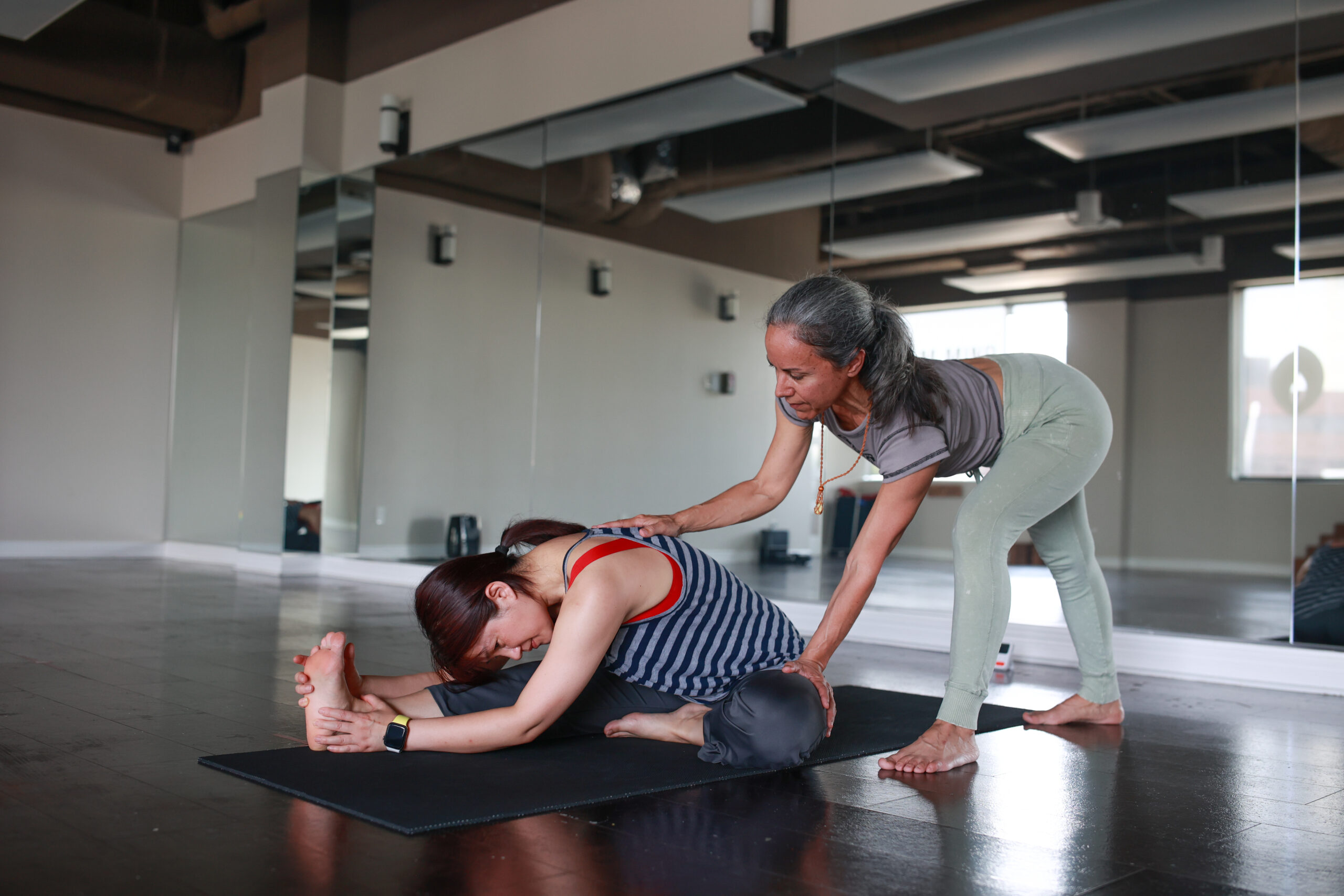
Teachers may use other contact points or surfaces of their bodies to provide passive, even pressure. For example, a teacher might gently place a flat forearm or shin against a student’s lower back or outer hip during a forward fold. Using a broader surface—such as the shin, forearm, or thigh—distributes the pressure and changes how the support feels.
Consider Ardha Matsyendrasana, or Half Lord of the Fishes Pose, a classic seated spinal twist. With the student’s consent, the teacher can use their leg as a stable vertical anchor along the student’s spine, creating a clear physical boundary that supports upward length. The teacher’s hands can then offer gentle direction for the rotation. In modern yoga pedagogy, this is an example of body-to-body stabilization: a larger contact area distributes pressure more evenly, helping the support feel secure rather than forceful. It is almost as if the teacher is saying, “I’ve got your back”—literally.
This example leads naturally to the second C: Confidence. A teacher must feel grounded and capable before offering tactile or physical support. Several schools now exclude physical touch from 200-hour programs and introduce it only in more advanced 300-hour training—a significant shift in modern yoga education that reflects concerns about confidence and safety.
This shift emphasizes that teachers need stability in their own stance before they can support someone else safely. Yoga Alliance no longer mandates hands-on assists within the core 200-hour curriculum. Because touch requires a deep understanding of trauma-informed space-holding, consent dynamics, and diverse body mechanics, it is increasingly treated as a specialized skill.
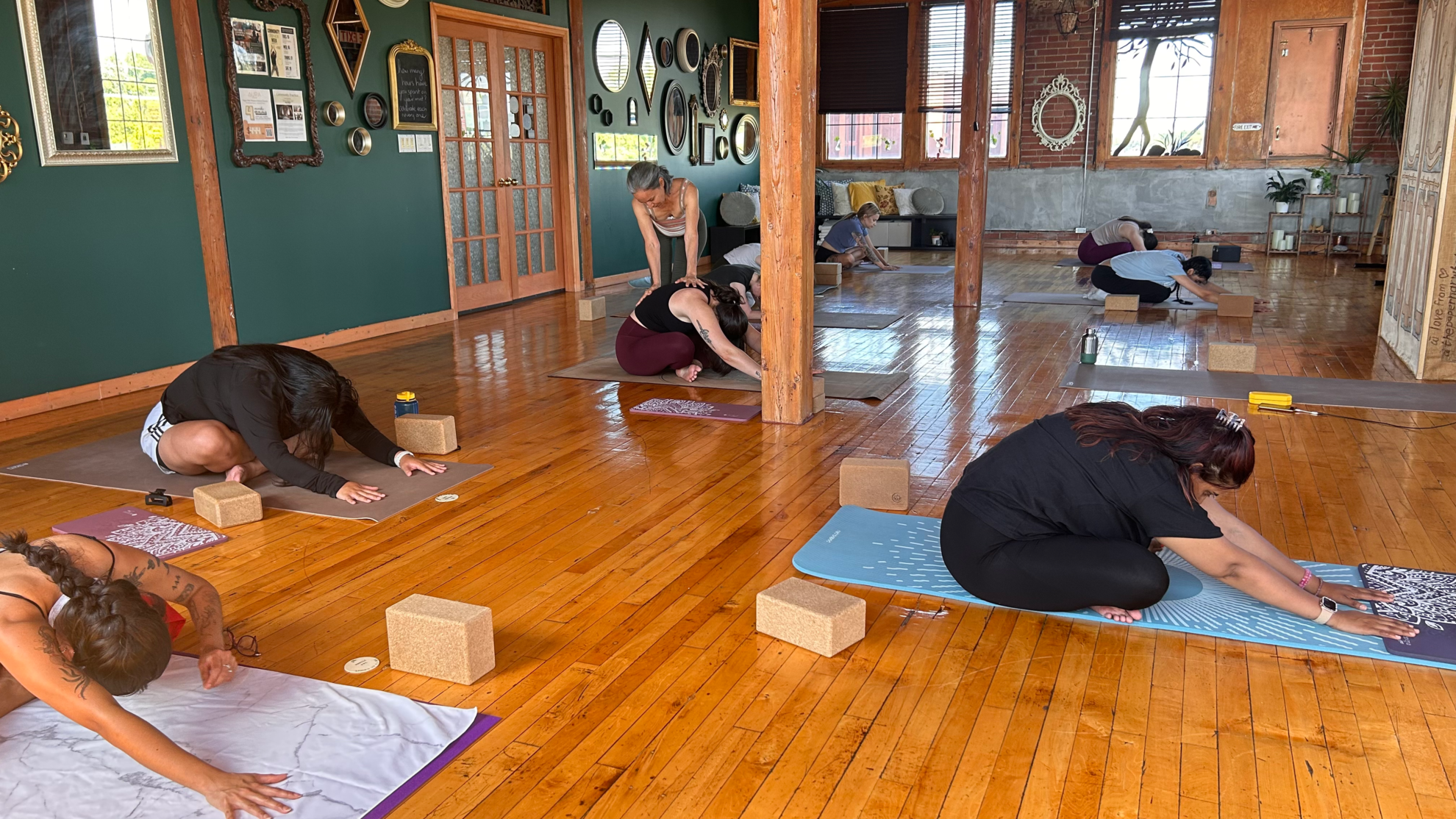
Our Collective Care: 200-Hour Yoga Teacher Training recognizes physical touch as an essential pillar of a complete yoga education. Because not every graduate will pursue a 300-hour certificate, trainees need to enter the classroom prepared to navigate physical interactions safely, ethically, and confidently from day one. We introduce physical support toward the end of the training, after trainees have developed a clear and steady verbal teaching voice. The practice remains grounded in student agency and trauma-informed principles: participation is never forced, and trainees practise within a structure of explicit mutual consent.
Our final C is Care. Supportive physical contact between teacher and student can be an act of profound care, expressed through attentive presence and the offer of a steady, grounding anchor.
For example, when a student folds forward from a cross-legged position, gentle, confident pressure on the back can help them root through the hips and lengthen the torso. This support may create an immediate sense of stability and ease in the lower back.
When consent, confidence, and care are present together, physical support becomes not a correction imposed on the student, but a respectful invitation to feel more grounded, aware, and at home in their own body.
t. lopez