

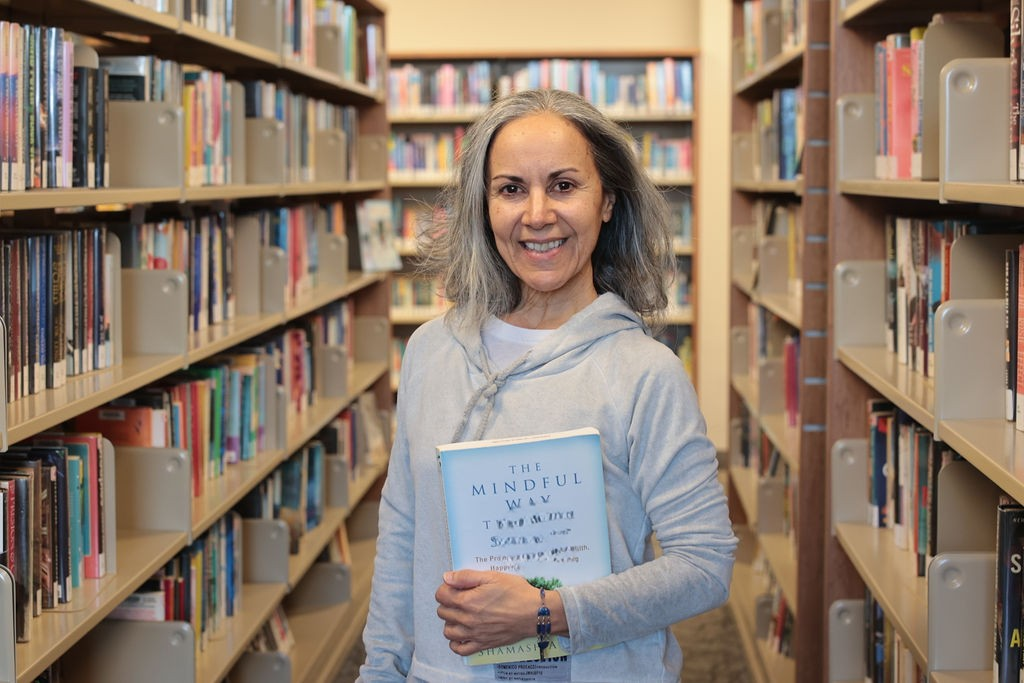
The other day, over tea, a friend asked me what I had been doing lately.
I can tell you too: reading.
The inspiration and insight I have found continue to resonate with me.
Some books are a breeze to read, while others are more demanding, requiring me to reread paragraphs—and sometimes whole pages—over and over again.
Some books share common themes, while others reveal important differences.
At the heart of the books I have chosen are many courageous women—women who refuse to remain silent and speak plainly, even when their lives and freedom are at stake.
We are living in times that demand our attention. As Arundhati says, “It means putting your ear to the ground and listening to the whispering of the truly powerless” (Listening to Grasshoppers).
Reading is an extraordinary act, and so is choosing what to read. It helps to widen the circle of authors we turn to and to set aside what is trivial or superficial. It also helps to be wary of those who align themselves with power.
What we consume shapes how we think, what we value, and what we become capable of noticing.
You may hear echoes of this in Carol’s words: “The language we once shared has been co-opted by extremists, and we’ve been reduced to barking and snapping.” Or: “We have arrived at a point where every word needs to count…” (At a Loss for Words). Arundhati also speaks of the theft of language: “Usurping words, deploying them like weapons to mask intent and to mean exactly the opposite of what they traditionally meant…” (Listening to Grasshoppers).
Through Vandana Shiva, we come to understand the struggles of contemporary agriculture. In “Seed Sovereignty, Food Security,” she powerfully states: “Today the freedom of nature and culture to evolve is under violent and direct threat, and the threat to seed freedom impacts the very fabric of human life and the life of the planet.”
Whatever you choose to read by Nawal El Saadawi, her call against patriarchy and colonialism offers a powerful model of advocacy, dedication, and fearlessness. You can also find her comments on social media and in interviews collected over the years, each marked by grace and courage.
As a yoga teacher, I wholeheartedly recommend Andrea R. Jain’s books Selling Yoga: From Counterculture to Pop Culture and Peace Love Yoga. I find her work provocative, courageous, deeply informed, and revolutionary. Here is one excerpt: “…the subversions of spiritual commodities-against global violence, hunger, suffering, globalization, colonialism, imperialism, and inequality-actually return to a neoliberal ethic of individual responsibilization, therefore functioning as a superficial point of resistance.”
Read authors such as Ghada Karmi, Susanna Barkataki, Claudia Rankine, and many others.
Reading is about engaging with the world we live in.
I think it is one of the ways we stay awake within it.
t. lopez